Back to School for Grandparents

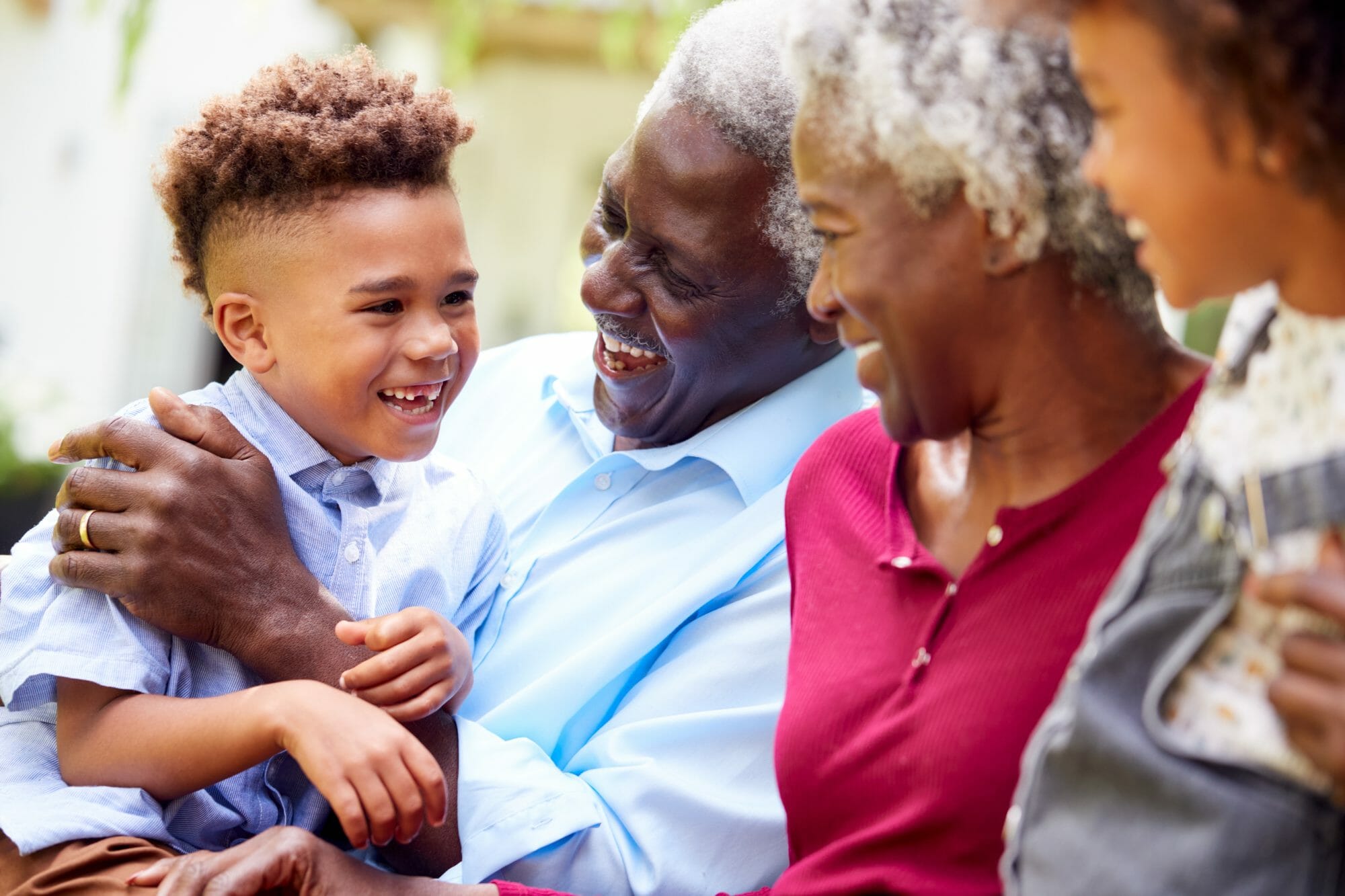
bigstock Loving Grandparents Talking Wi 431323874

Special Feature

It is a documented fact. Today’s grandparents are more intellectually curious, tech-savvy, physically active, and creative than a generation ago. Dr. Gene Cohen states in his book The Creative Age, “Studies of aging are showing that the potential for creative expression in the 2nd half of life is not the exception but the rule. Creative expression occurs not despite aging but because of aging.”

When Paul wrote to the church in Ephesus and said in Ephesians 2:10, “We are His workmanship, created in Christ Jesus for good works, which God prepared beforehand, that we should walk in them,” the age of his audience was never specified. Every age is applied! As our grandchildren return to their learning environments, grandparents should lead the way to the joy of learning and of being a life-long student. 

As a grandparent consider:

  • Never stop dreaming. Never stop setting goals or planning personal and family adventures.
  • Gather and create a resource of beloved books to pass on to children and grandchildren.
  • Learn a new interest. Take a course of study. Learn a new hobby.
  • Travel to new places – near and far.

For the grandchild consider: 

  • Join or start a moms/grandmoms prayer group. Go to www.momsinprayer.org for information.
  • Volunteer to read in your grandchild’s classroom or school library.
  • Create a field trip matching what your grandchild is learning. Visit historical locations or museums.
  • Find out what they may be learning in history, science, or biology then research further to generate discussion.
  • Support your grandchild’s teacher. Send encouraging notes and prayerful thoughts. 
  • Volunteer to help with a craft or party around a holiday or special event.
  • Offer Carpool and after-school care. A great resource for car time can be found at www.backseatbiblenuggets.com. 

Whether homeschool, private or public education, the intentional Christian grandparent has a great deal to contribute to the balance and health of our grandchildren. Our families need us now more than ever as we navigate the educational systems of our culture. The enemy’s attacks against our children persist to waylay our families and God’s moral foundations. Grandparents can make a difference in their student life. Step up and step into your grandchildren’s education this school year. Don’t forget! Sunday, September 10, 2023 is National Grandparent Day- a call for Christian grandparents to pray and stand in the gap for their grandchildren and future generations.

-Cynthia Moss

Director of GrandLife-Grandparenting Ministry of Shades Mountain Baptist Church

[email protected]

Screen Shot 2023 06 26 at 3.43.18 PM

Parenting Points

Our world is marked by division. We all live in our separate camps based on similar views and values. These spaces become echo chambers where the same ideas circulate, and we can often forget that other people may see the world in totally different ways. We often reject relationships with people who are different than us. If we were to get on a plane and go on an international mission trip, we would not be surprised to experience a culture that didn’t fit well into our boxes and camps. We need to remember that our mission field isn’t just around the world but also every day in every place we go. If we decided to approach other people with the mindset of mission by not expecting people to think like us before we can love or befriend them, imagine how the walls of division could begin to come down. What could it look like for our families to approach people different from us with the mindset of mission?

Remember to Look for God’s Fingerprints. One of the beauties of creation is that God made people all different and in “His image” (Genesis 1:27 ESV). When we interact with people who likely believe differently, we must not forget that they are God’s special creations made in His image.

Listen to Another’s Perspective. By listening to someone else’s perspective, we put ourselves in the position of the learner. We want to learn someone’s story and perspective before trying to align them with our own. James’ words of wisdom help us frame our best approach: “Be quick to hear, slow to speak, slow to anger” (James 1:19b ESV).

Look for Ways to Come Together. There is mercy and grace in common ground. When we seek to find the things that bring us together, we can see space for a relationship to form. Through relationships, we can grow in understanding, love, and compassion for other people. We may even realize that someone doesn’t have to totally agree with us to be our friend or even to follow Jesus faithfully. 

One of the distinguishing marks of the early church was their love for one another and the world. What impact could your family have if you value building relationships over being right? As Bob Goff reminds us in his book Love Does: “Most people need love and acceptance a lot more than they need advice.” 

Ben Birdsong-Dr. Ben Birdsong 

Missions Minister at Christ Church Birmingham 

Writer and Speaker
www.benbirdsong.com

Father with daughter

Parenting Points

Doubts and questions from kids about faith are usually something that can strike fear into the heart of every parent. For the questions, the fear is not knowing the right answer. We dread having to explain that when it comes to faith, there are many things which we don’t have clear answers. For doubts, the fear is that our children will choose not to believe and walk with Jesus.

When these questions arise, our response to our kids is very important. Many likely grew up in church environments where we could not ask questions, express concerns, and wrestle with doubts. We were told to believe because that is what we should believe. For many children, these responses slammed the door on further conversation. Faith was defined as a place of clear canned answers that should be accepted without further conversation. These slamming-the-door responses to our kids do more harm than good. Research has shown that doubt is an important part of a child’s personal faith journey. Each person needs to wrestle with what they believe so that the faith that they have been taught from their parents can become their faith. Frequently, this happens through conversations involving questions and doubts.

In discussing effective faith transmission from parents to their kids, Duffy Robbins writes, “helping students to develop a real-life faith means helping students to flesh out their faith…to be put in a position that forces them to experience and explore their own faith in God.” Through doubts and questions, children are given the space to wrestle with their faith. In these moments, their faith can be strengthened even if the answers to the questions are that “we cannot understand God and His ways completely, but we know we can trust His heart to be faithful to us.” We need to create a safe space for their questions and doubts and be real with them about our struggles to believe and questions along the way. We can be faithful conversation partners for our kids as we seek to walk this road of faith together. Maybe our prayer for ourselves and our kids should be less for specific answers and like the man with the demon-possessed boy: “I believe; help my unbelief” (Mark 9:24 ESV). Our God meets us and our children amid our questions and doubts. We may find that His presence and power is better than the best answers we may desire.

Ben Birdsong-Dr. Ben Birdsong 

Missions Minister at Christ Church Birmingham 

Writer and Speaker

www.benbirdsong.com


Duffy Robbins, The Ministry of Nurture: A Youth Workers Guide to Discipling Teenagers (Grand Rapids: Zondervan Publishing House, 1990), 160.

bigstock Happy Hispanic Latin Family Ha 464524811

Parenting Points

So often, our families are defined by busyness. We run from one thing to the next in a constant shuffle to keep up. Our family’s lives have very little margin, but it is in the margin where we allow space to slow down and notice God’s work and the opportunities He puts before us. Leaving space for margin in our lives could open three different opportunities for our families and us.

1. Margin for Jesus. In Matthew 14, Jesus has been in a very busy season of life and ministry, yet He “took time by himself to pray” (Matthew 14:23 ESV). Jesus was intentional to find margin even in a busy season to spend time with the Father and to cultivate growth in His relationship with God. Jesus made the space in the middle of the crazy for what mattered most to Him. Does your family schedule have margin for time with Jesus?

2. Margin for Relationships. Though relationships may include much activity, they are built through conversations, time, and intentionality. These building blocks all come from margin. Throughout the gospels, we see many times when Jesus took time away from the masses to spend time with His disciples. Jesus created a free space to build and deepen relationships. In the free space of margin, we allow life to slow enough to have conversations that matter with our spouses, kids, friends, extended families, and neighbors. Does your family pace have time for good conversations?

3. Margin for Ministry.  God is at work constantly in the world around us, but we often miss it because of our busyness. Daily, God puts opportunities in front of us to serve, love, and give. In Mark 5, Jesus allowed Himself to be interrupted by a woman who was bleeding and needed His help. Jesus took time to pause, notice her, and bring healing to her. Maybe if we took a minute to slow down our busyness, we might see whom God has placed in front of us to minister to and encourage. Does your family schedule allow time to look for opportunities to join God in His work?

Though our culture celebrates busyness, opportunities are found in the margin of our lives. Through the extra space in our family’s schedule, we can connect with Jesus, grow deeper in our relationships with others, and join God in His work.

Ben Birdsong -Dr. Ben Birdsong 

Missions Minister at Christ Church Birmingham 

Writer and Speaker

www.benbirdsong.com

bigstock Happy Family With Little Son A 462536287

Parenting Points

Being offended is the fuel for many in our culture. Neighborhood Facebook groups thrive over the latest offense, whether it was the family who will not cut the grass quickly enough or the unresponsible dog owner who didn’t clean up on the neighborhood walk. Many people live in a state of constant offense, waiting on the next triggering incident.

Not falling into the trap of constant offense is a way that your family can stand out for Jesus in the triggered culture all around you. Proverbs 10:12 ESV says, “Hatred stirs up strife, but love covers all offenses.” What would it look like if we began to teach our children to view the world through the lens of love rather than the target of offense? How would our own lives be different if we lived this way?

The Lens of Love Remembers What Actually Matters. Most of the things people are offended about are not really major issues. The present from the neighbor’s dog in the front yard, the grass that is a little too long, or the extra waiting time at the restaurant. Though in the moment, the significance of these things seems large, these are not major issues. We need to teach our kids and learn ourselves to weigh issues on the greater scale of what truly matters – eternity, relationships, health, etc. Everyday offenses then fall into their proper place.

The Lens of Love Considers Someone Else’s Situation. It is easy for us to respond to people before we take the time to recognize that the person who offended us is a person. They have been made in the image of God. They have their own struggles, hardships, and challenges. They are dealing with things on the inside that we may never know. Sometimes if we take a second to pause and remember that we would want to be given grace and the benefit of the doubt that we can extend that same grace to others. The lens of love makes the decision to let the first response to a triggering situation not be hatred or judgment but love. Love enough to pause and consider what really matters. Love to recognize the fingerprints of God on the life and story of the offending person. Love enough to let the light of Jesus shine through you and your family’s lives rather than the ammunition of being triggered at yet another offense.

Ben Birdsong-Dr. Ben Birdsong 

Missions Minister at Christ Church Birmingham 

Writer and Speaker

www.benbirdsong.com

bigstock Christian Life Crisis Prayer T 411450763

Parenting Points

One of the blessings that God gives us is relationships with others. As we have finished the Thanksgiving and Christmas season, we have had a focus on relationships whether it was those who attended our holiday parties, gathered around our tables, or mailed us a Christmas card. Our families have been blessed and made better by those who God has placed in our circles.

In his letter to Timothy, Paul encouraged him to make prayer a priority: “I urge that supplications, prayers, intercessions, and thanksgivings be made for all people” (1 Timothy 2:1 ESV). God has given us a circle of people who our family can support through prayer. As we begin a new year, here are some ways your family can become more intentional to pray for those people God has placed in your circles:

Building a Prayer Needs List for Your Circle. Many times, we find ourselves in conversations where items for prayer come up. If we were in a small group at church, we would likely put them on a prayer list, but in everyday life, it is easy for us to pass them by. Next time someone tells you about their relative having surgery, their spouse losing a job, or their stressed-out schedule, take a minute to write that prayer request on a note in your phone. This note can be your ever-growing prayer list for your circle. When you see the person, you can encourage them by checking in on the need and tell them that you have been praying.

Christmas Card Prayers. Instead of throwing away or filing your Christmas cards, come up with a place to display one Christmas card a week. Spend some time intentionally that week praying for the family who sent the Christmas card. The next week move to the next Christmas card for the display for prayer.

Praying for People God Has Brought Across Your Path. Every day we see and interact with different people who God brings along our path. When your family gathers around the dinner table, take a few minutes to think over the day, remember who God brought across your path, and pray for them.

Through prayer, our families can bring others before God seeking Him to work in the circles of people, He has blessed us with. We can be both a blessing and an encouragement to our circles.

Ben Birdsong-Dr. Ben Birdsong 

Missions Minister at Christ Church Birmingham 

Writer and Speaker

www.benbirdsong.com

bigstock Positive Young Housewife With 388247119

Parenting Points

Thanksgiving is a time to celebrate and remember. We are given a national holiday focused on thanks, yet sometimes, it is easy for us in our lives to celebrate our blessings without remembering the Source. 

In Daniel 4, King Nebuchadnezzar falls into the trap of forgetting the Source. As he looks around and sees all the blessings God has provided him, he comments, “Is not this great Babylon, which I have built by my mighty power as a royal residence for the glory of my majesty?” (Daniel 4:30 ESV). In the very next moment, Nebuchadnezzar hears a voice from heaven saying that God will remove the kingdom from him and cause him to lose his mind. Nebuchadnezzar had forgotten the Source. It cost him his kingdom and his life as he knew it.

During our Thanksgiving holiday, it is easy for us and our families to get so busy that we also fall into the trap of forgetting the source. Though we may not be as bold as Nebuchadnezzar to say it out loud, we can easily think that the food on the table is the result of our hard work at the office. Amid our wealth, we can miss our need and utter dependency on God as our Source. Throughout the Psalms, we read prayers of thanks to God for His provision. In Psalm 9:1 ESV, David writes, “I will give thanks to God with my whole heart; I will recount all of your wonderful deeds.” One of the many ways to thank God is to remember all He has done as the source of all good in our lives. Psalm 136:1 ESV reads, “Give thanks to the Lord, for He is good.” His goodness is all around us, yet we never slow down to notice and remember the Source.

This Thanksgiving, how will your family take time to remember the Source? What are some of the countless ways God has blessed you and your family? Where do you see the goodness of God? Maybe, this Thanksgiving dinner could begin with a time of praise for the Source rather than simply diving into another great meal.

Ben Birdsong-Dr. Ben Birdsong

Missions Minister at Christ Church Birmingham 

Writer and Speaker

www.benbirdsong.com

bigstock Kids And Parents On Halloween 204210697

Parenting Points

Halloween is October’s national holiday, yet for some Christians, Halloween is taboo. Due to the evil nature of the day with ghosts, goblins, and devils, many Christians have sought to avoid the day by either turning off all the lights to hide from kids in costumes or running down to the local church for the latest “fall festival” activity. But what if Halloween became a strategic day for your family to build connections with your neighbors?

When it comes to cultural engagement, theologians have debated over the course of many pages what the appropriate Christian response is to engaging culture. Should Christians seek just to become another part of the broader culture? Should we create our own Christianized copy of the culture (i.e., fall festivals)? Or should we seek to look thoughtfully for opportunities to step into a cultural moment to shine as the light in the darkness? In the middle of the darkness of Halloween, followers of Jesus have an excellent opportunity to be the light. In choosing to be the light in the darkness, we can be like John the Baptist, standing in the darkness and pointing to Jesus as the light: He came as a witness, to bear witness about the light, that all might believe through him” (John 1:7).

Your family has an opportunity to bear witness to Jesus’ light this Halloween. When we think of this statement, our minds may rush to ideas of passing out tracts at the door or making people listen to gospel presentations for a free mini-Snickers bar. Just as Jesus came into the darkness relationally, our approach to being the light of Jesus to our neighbors must first and foremost be relational. We want to love our neighbors well, befriend them, and point them to the hope we have found in Jesus through our words, actions, and deeds. Engaging your neighbors for Halloween begins by being intentional about being home on Halloween night. Halloween is a great night to meet neighbors and begin to build relationships. Through these connections, God may open doors to go deeper into relationships.

This Halloween may be a great opportunity for your family to stop hiding from your neighbors in the back of the house or run to attend the fall festival at the local church. Trading these activities may open the door for your home to be a place of light, hope, and healing for those around you.

Ben Birdsong-Dr. Ben Birdsong

Missions Minister at Christ Church Birmingham

Writer and Speaker

www.benbirdsong.com

Screen Shot 2022 08 25 at 11.43.45 AM

Parenting Points

It is easy for us to get caught in an every day Groundhog Day. Like the Bill Murray movie, we can find ourselves and our families constantly living the same routine, going to the same places, and interacting with the same people. 

If we take the time to stop and think about this, we end up filling our world and the worlds of our children with people who are just like us. We are likely of the same race, go to the same churches and schools, are in the same economic class, and have the same political views. We have not just created the repeating world of Groundhog Day; we have also created a world by us, for us, and many times surrounded by people just like us. When we live in a homogeneous world, we miss what God is doing in the world around us. As we seek to expand our view of the world, we will experience:

The Creativity of God. As we get to know people from different cultures and who live in different places, we see the creativity of God. He made all peoples and every culture in its own unique way expresses the beauty of its Creator.

The Depth of Need. When we go to another culture, we may see needs and opportunities where we can serve. We may have some resources, knowledge, and relationships that can be leveraged on behalf of others. We can be the hands and feet of Jesus to a needy world.

The Truth that Our Ways Are Not Always Best. In approaching another culture, we must come with a spirit of humility. We don’t know everything, and there is much that could grow in our own lives if we were willing to take the place of a student to learn from others. Experiencing other cultures helps us from falling deeply into the trap of believing that our ways are always the best and our world is the standard.

Let us look for everyday ways to break out of our little box of normal we have created to join God in what He is doing in the world around us. We will see God’s beauty, opportunities to join Him in mission, and can grow as we take the posture of a humble student.

Ben Birdsong-Dr. Ben Birdsong 

Missions Minister at Christ Church Birmingham

Writer and Speaker

www.benbirdsong.com 

bigstock Rain In City Two Women With U 456810511

Parenting Points

We live in a world where people feel alone. From the social separation of the pandemic to the distance of social media, many people feel like outsiders. As followers of Jesus, we are called to care for outsiders. 

In writing to the church at Philippi, Paul wrote of Jesus coming from heaven as an outsider into our broken world. He left heaven’s perfection to go into our world’s brokenness. The true outsider became an insider to rescue people like us living as outsiders on the margins, lost in our brokenness. In describing this picture of Jesus to the church, Paul writes that Christians should “let each of you not only look to your own interests, but also the interests of others” (Philippians 2:4 ESV). We have been invited to join Jesus in engaging the outsiders in the world around us. 

Who are today’s outsiders? The outsider could be the single mom at church who doesn’t have a place in the church’s small group structure. The outsider could be the Afghan or Ukrainian refugee who has moved to your community. The outsider could be the new student at your child’s school. The outsider could be a widowed neighbor down the street. Here are three ways our families can seek to care for outsiders. 

1. Notice the Outsider. It is easy for us to get busy with our lives and miss the people God is putting on our path. Noticing takes both time and intention. Pray that God would open you and your family’s eyes to the outsiders around you. 

2. Engage the Outsider. Start a conversation, take them a meal, invite them to come to sit at the lunch table beside you, and tangibly show them love and grace. Be willing to get to know the outsiders around you.

3. Befriend the Outsider. Let the engagement be the launching point for the relationship. Bring them into the life of your family. Let them join the lunch group in the elementary school cafeteria. Go together to the ball game.

As we engage outsiders by inviting them to be a part of our family, we will be able to point people by our love and friendship to Jesus, who took outsiders like us and made us part of His family.

Ben Birdsong-Dr. Ben Birdsong 

Missions Minister at Christ Church Birmingham

Writer and Speaker

www.benbirdsong.com 


Get MORE
Good News!

Join our Free E-newsletter packed with the latest family fun events, great recipes, inspiring stories, and all kinds of resources for you and your family.

Close the CTA
birmingham christian family logo