
Special Feature


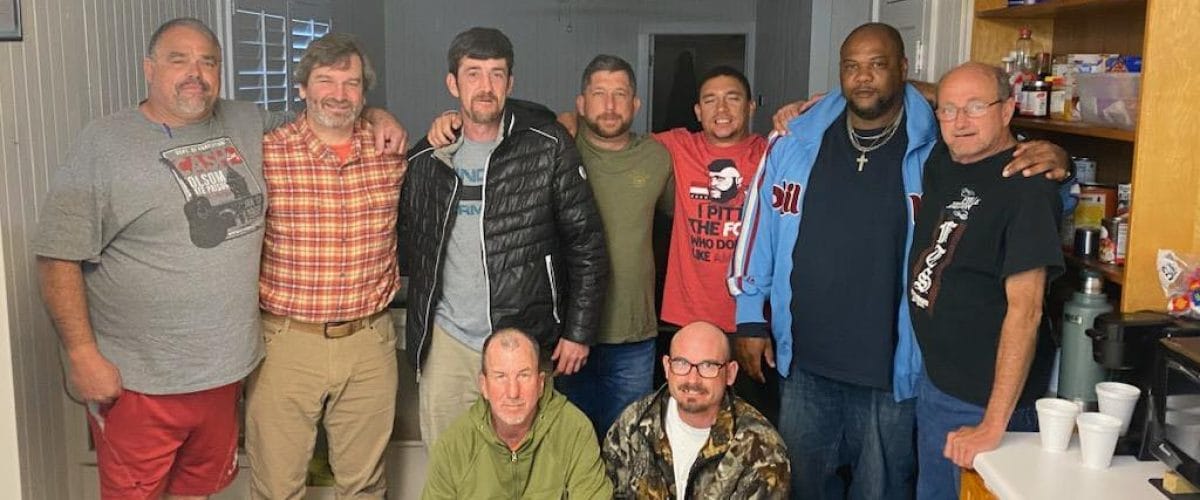
For years now, I have taught the men at Crossover Ministries in Opp, Ala., about Biblical masculinity. We live in a world that has convinced generations of men that to be truly masculine, they must be able to train alone in Siberia and win the big fight. Current culture reinforces the notion that real men do not cry, that strength means self-sufficiency, and that dependence on God is somehow a flaw in the design. That is not Biblical masculinity. Ironically, the men I teach have often fully embraced that distorted version. They are fighters, brawlers, scrappers—many of them violent men whom I have prosecuted and sent to prison myself. Some of them hated me long before they ever sat in my classroom. And yet, I walk into that room and stand before them anyway. The simple act of showing up—of standing there despite the history, despite the resentment—demonstrates something they rarely experienced from men in their lives: love. That is why I do it.
Several months ago, one young man who had not spoken a single word in my class for nearly four months raised his hand. I had prosecuted him, and I knew he carried a grudge. He had never made eye contact with me. When I gave him the floor that day, I felt a nervous energy rise in my chest. I did not know what was about to come. His hair hung low over one eye like Opie Taylor, and his expression was steady. “I’ve hated you for a very long time,” he said. He proceeded to unload on me for nearly a minute—how I had put him in jail, how I had taken years from his life, how I had hurt his family. I leaned a little harder against the podium, bracing myself for the blow that might follow. But when he finished, he reached up, brushed his hair out of his eyes, and said, “But now I understand that you did it because you really do love me.” He went on to explain that he needed someone to blame, and I had been his scapegoat. Through his time at Crossover, however, he had begun to understand accountability. He had learned that real manhood is not about dominance or violence but about humility, repentance, and surrender. He realized that I had not done anything to him except hold him responsible for his own choices. That moment—watching the hardness soften in his eyes—was the kind of transformation we pray Christ will inspire in every man who walks through those doors. But transformation must last beyond the walls of our care. What good is reform if it does not follow a man back into the world? When I teach about masculinity, I often take the men to Peter stepping out of the boat. The world would have advised Peter to swim back to safety when he began to sink. Clothed in heavy garments and uncertain whether he even knew how to swim, that advice likely would have drowned him. The world might also have suggested he call out to the others in the boat for help. “Throw me a rope!” But Scripture tells us the knuckleheads in that boat were cowering in fear. They were in no position to rescue anyone. Peter had worldly options, but he chose the only one that could actually save him. He cried out, “Lord, save me!” And Jesus did. That is Biblical masculinity—recognizing your insufficiency and calling upon the only One who is sufficient. The world does not want men to do that. It wants them silent, self-reliant, and quietly drowning.
Near midnight one evening, my phone rang. It was Sheriff Blake Turman. He apologized for waking me but said he wanted me to know that “Bob” had overdosed and that it did not look good. Blake and I had both worked with Bob for years, urging him toward recovery and toward Crossover. Blake’s voice trembled as he explained that Bob had been in a trailer with other addicts. When he overdosed, they left him there. By the time deputies arrived, he was alone. I dressed and drove to the scene. Before I arrived, Bob had already been transported to the hospital. As I pulled into the yard, Blake met me with the news: Bob did not make it. We stood there in the quiet darkness and prayed for Bob and his family. Bob died because the knuckleheads in the boat were too afraid to help him in his most desperate hour. He never went through Crossover. Blake and I tried repeatedly to persuade him. He would speak passionately about change until he could secure a little money from someone else, and then he would run back to the same knuckleheads. The men he surrounded himself with were not stretcher bearers; they were escape artists.
In class, I also teach about the men who carried their paralyzed friend to Jesus. When they could not get through the crowd, they climbed onto the roof, tore it open, and lowered him down before Christ. That is Biblical masculinity—surrounding yourself with men who will overcome obstacles to carry you to Jesus when you cannot walk on your own. What we do not need are companions who disappear at the first sign of trouble. We need men who love us enough to shoulder our weight. It was nearly five in the morning when I left that trailer. I drove to Hardee’s for a biscuit and then to Wal-Mart for coffee and toilet paper. The ordinary errands of life feel strange after death. I sat in the parking lot for a moment longer than usual, reluctant to step out of the truck. There are days when retreat sounds appealing- days when locking the door and withdrawing from the weight of it all feels easier than engaging it. But even in that parking lot, God reminded me that there is work still to be done. There are stretchers yet to carry. There are men fighting for sobriety and winning. There are young men learning that strength is not measured by how much destruction they can cause but by how much love they are willing to give. Biblical masculinity is not forged in isolation; it is formed in surrender. It is not proven by conquering armies; it is revealed in the courage to stand accountable, to cry out to Christ, and to carry a brother when he falls.
I loved Bob whether he was sober or high, but I loved him in his sobriety more. I wish he had allowed himself to be carried. I wish he had chosen differently. His story now fuels the urgency of the mission. We cannot afford to raise men who think independence is strength and vulnerability is weakness. We must teach them that true manhood kneels before God and stands beside broken brothers. Fight the good fight. Keep the faith. Finish the race.
-Walt Merrell is a Christian Outdoorsman who writes of his adventures with his family, with the hope that others might be inspired and encouraged to embrace God’s tapestry, otherwise known as the great outdoors, as a means of finding Common Ground. You can follow him at Shepherding Outdoors on FB, YT and IG and at shepherdingoutdoors.com.

